Educators are all too familiar with the National Assessment of Educational Progress, or NAEP. It's known as the nation's report card– and as a country, our grades are dropping.
K-12 educators have the highest burnout rates of any segment of the U.S. workforce. We chat with two experts to help explore burnout's root causes, repercussions, and remedies.
Robert Zemsky highlights a broader trend of devaluation in higher education and the challenges faced by institutions cutting faculty positions and programs, suggesting that only top-tier universities are thriving while others are struggling.
Peter Eckel explores the evolution of governance choices in post-Soviet universities. He discusses four distinct governance models that have emerged across the region, emphasizing the need for flexible and context-specific governance structures to meet the diverse needs of higher education institutions in these countries.
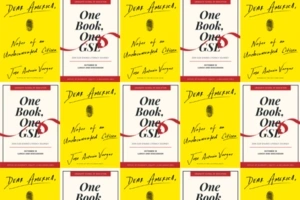
For this year’s One Book, One GSE initiative, the Penn GSE community embarks on a shared literary journey focused on Jose Antonio Vargas’s Dear America: Notes of an Undocumented Citizen, a deeply personal perspective on the experiences of undocumented immigrants in the U.S. A School-wide lunch and discussion about the book will be held Oct. 18.
In addition to a chaired professorship in her name and a fellowship she helped establish, Clayton leaves behind a legacy of quality education for students from all backgrounds.
In this timely episode of the Educator's Playbook podcast, we confront the pervasive issue of gun violence and its reverberating effects across K-12 education.
New generative AI tools like ChatGPT seemingly hit our classrooms overnight. In this episode, we're focusing on how educators are being forced to adapt and adopt on the fly.
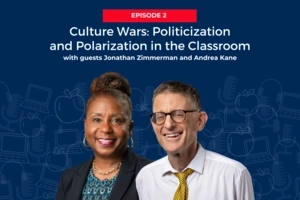
As schools find themselves at the epicenter of debates surrounding issues like race, gender and sexual orientation, educators must grapple with the challenges of a rapidly politicized classroom environment.
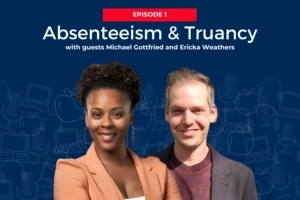
Chronic absenteeism and truancy are on the rise, hindering student success. In our debut episode of the Educator’s Playbook podcast, we speak with two experts on the issue.
Richard Ingersoll concerns about the underrepresentation of male teachers in elementary school, and emphasizes the need for a more balanced gender mix among educators.
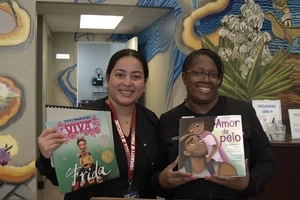
Meresa García, an Urban Teaching Apprenticeship Program student at Penn GSE, has embarked on a mission to promote literacy and education in Philadelphia. Her journey into advocacy was ignited by her lifelong love for books and her realization of the challenges facing public school students in the city.
Jacobs was part of a panel discussion on the practice, which aims to arm students with coping skills and awareness to navigate their trauma in school and educational settings successfully.
When students miss school, it negatively impacts their learning and social skills. Michael Gottfried says the ripple effects also interrupt learning for peers and strain teachers.
Kandi Wiens offers strategies to prevent overworking after a vacation, emphasizing the importance of work recovery for sustained performance and well-being.
Launching this fall, the Educator's Playbook podcast will examine some of the biggest issues facing K-12 today and share practical, easy-to-implement advice.
Amid the aftermath of pandemic-induced disruptions, college students are grappling with significant challenges in mastering basic math skills, a consequence of the shift to remote schooling. These setbacks have left a particularly pronounced impact on vulnerable student groups, says Dean Strunk.
Ross Aikins reports findings to Inside Higher Ed from interviews with dozens of students about how they used AI tools in their studies over the spring and summer. Going into fall, he says, faculty will need to revisit their policies early and often.
Robert Zemsky questions the effectiveness of mergers like Vermont State University's consolidation of three struggling colleges in addressing core issues faced by these institutions.
The project's first 3-year degree pilot recently launched at the University of Minnesota Rochester, one of more than a dozen colleges and universities planning similar programs with the project. The idea of a 3-year bachelor’s degree is on track to become ubiquitous, Zemsky says.
Ryan Baker emphasizes the importance of ensuring secure data sharing between educational institutions and technology providers, particularly in the context of utilizing AI in education.
Mark Ziegler-Thayer started out as a part-time kindergarten teacher’s assistant. The experience changed their life. Two master’s degrees later, they are now working to effect change at the national level in a prestigious, two-year Presidential Management Fellows program, where they hope to increase access to high-quality and equitable education for all students.
In an Op-Ed, Karen Weaver discusses many of the issues college presidents have been facing lately, particularly around their sports programs, and Penn GSE’s efforts to address the gap in the education and training of current college presidents.
The 6-week pilot in West Philly replaces traditional course blocks with round-robin stations and eschews technology, with each classroom led by a team of five educators.
Damani White-Lewis told Science last week that a recent study finding many researchers of color are at a disadvantage in the postdoctoral hiring process is both “very important” and “very needed.” He proposed addressing the issue by increasing network connections across universities to create “strong bonds” for minorities.
Julie Wollman says large gifts are a legitimate reason to retain legacy preferences, but donors who want to reward universities for ending legacy could also step in and keep funds coming.
Three southern California school districts joined the program in 2022–23 as K–12 leaders navigate unprecedented external pressure. Founded in 1943 and until now concentrated in the Northeast, the Center helps superintendents and leaders work collaboratively to identify professional challenges, share best practices, and provide development opportunities.
Six master’s candidates received funding from the Jacobs Foundation for their social impact ventures this year. Applications are being accepted for the next cohort until Sept. 15.
Organizers are seeking presentations of original curriculum, research, or pedagogy related to re-establishing school and classroom communities as authentic, positive, and nurturing spaces. Submissions are due Aug. 18.
The latest survey of college presidents by the American Council on Education shows that higher ed leaders want help with athletics, communications, and school finances. That’s where Penn GSE comes in.
Penn GSE Professor Sigal Ben-Porath has been named the MRMJJ Presidential Professor and Associate Dean for Research and Faculty Affairs Susan Yoon has been named the Graduate School of Education Presidential Professor. Both are the first to hold their respective chairs, which begin with the 2023–2024 academic year.
Penn GSE Associate Professor Rand Quinn has been appointed faculty director of Civic House and the Civic Scholars Program. He begins in the role Aug. 1.
In the wake of the Supreme Court striking down affirmative action, Jonathan Zimmerman writes that what will really make a difference for Black and brown students is improved classroom instruction.
Jonathan Zimmerman says a new take on summer schooling could connect more teachers with the passion and idealism that brought them into education in the first place.
A Book a Day Founder and Executive Director Sibylla Shekerdjiska-Benatova is a master’s student in Penn GSE’s Reading/Writing/Literacy program. She says children need engaging and relatable books in order to help them embrace reading and build foundational skills.
Dean Katharine Strunk says data has grown increasingly political with the general polarization around public education; she says data does not need to be weaponized.
Ryan Baker says educators must look at a technology’s track record in the context of their own school’s demographics, geography, culture, and challenges when considering investing in new technology for the classroom.
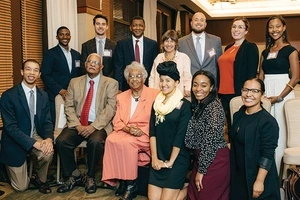
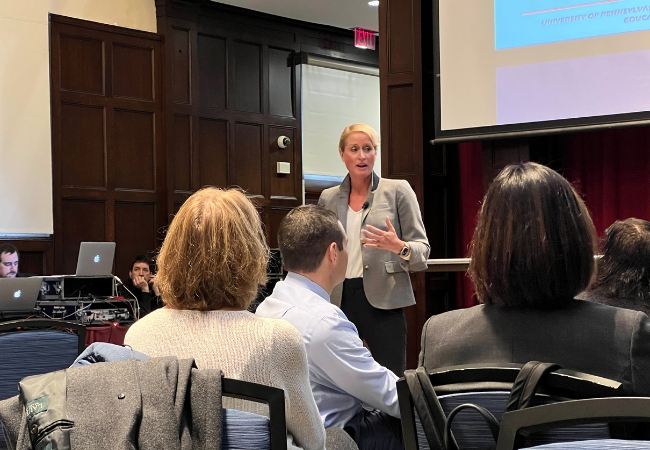
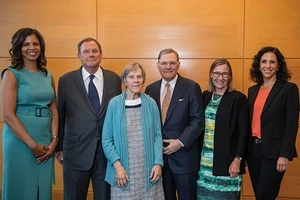
The event launching Penn GSE’s McGraw Center for Educational Leadership set the tone for the Center’s future: gathering great educational minds from across the School along with outside experts to tackle the big issues facing education today.
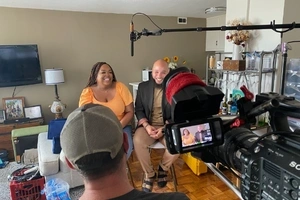
When Brittany Robertson and Serrano Legrand met in 2016, they became instant friends. Prospective students, they knew exciting opportunities lay ahead – but they never imagined they’d star together in one of their favorite reality TV shows.
Jonathan Zimmerman says that, in light of affirmative action being overturned, some colleges may base admissions on income. That could bring in more white working-class students, which will make campuses more ideologically diverse places.