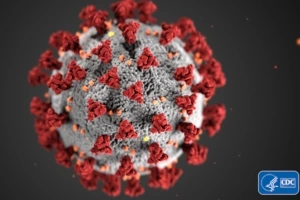
Alan Ruby said, “There will be a deterrent effect, especially on international students. The choice of destination for study abroad is influenced by perceptions about personal safety. The virus, and the response to it, is a reminder that health services and hygiene standards are not what some students are familiar with.”
Jonathan Zimmerman writes, “Schools are always implicated in national crises, always,” pointing to schools’ role selling war bonds during World War I and cultivating victory gardens in World War II. “But in prior crises, they were engaged in the struggle, because it was a struggle against a human enemy rather than a biological one. This is a struggle against a biological one that requires schools not to step up, but to stand down.”
Betsy Rymes discusses “citizen sociolinguistics,” an innovation in which online data are extensively used as evidence of how language and language usage are being understood and made meaningful socially.
The city needs more college graduates. Laura Perna argues a Kenney Administration proposal that includes scholarships and supports would put Philadelphia on track.
We asked online education expert Ryan Baker what school leaders and parents should be thinking about it. His advice: be flexible — and don’t discount library books.
Writing in Phi Delta Kappan, Penn GSE Dean Pam Grossman makes the case for creating a common language and set of practices to define professional teaching.
Research Minutes Educational Research and Policy Podcast
Laura Perna joins CPRE Executive Director Jonathan Supovitz to discuss her team’s study on Net Price Calculators and some important implications for higher education policymakers and college officials.
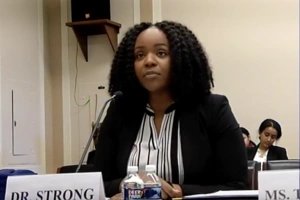
Strong said African students are “learning what it means to be a citizen, developing political identities, and learning the extent to which their governments and societies will support them.”
Laura Perna writes that more must be done to recognize the extent to which college students are working and take actions that minimize the harm, and maximize the benefits, of student employment.
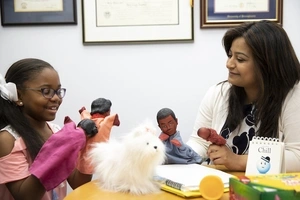
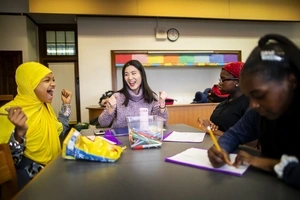
Restorative justice has the potential to transform school cultures across the intersections of race, class, gender, ability, and sexuality to better serve all our communities.
Robert Zemsky discusses market pressures of higher education and his book, The College Stress Test. The conversation around what is happening in higher ed is “caught among extreme visions.” Necessary innovations for systemic change are difficult to pull off, he says.
Penn GSE’s Michael Nakkula and Andy Danilchick are at the forefront of research into possibility development, an emerging field in the study of human development.
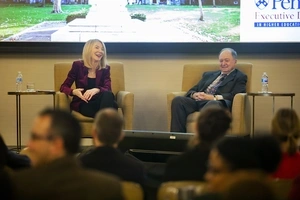
President Amy Gutmann and Graduate School of Education scholar Robert Zemsky took part in a “fireside chat” at this year’s Higher Education Leadership Conference at Penn, which also awarded Gutmann the Zemsky Medal.
Sigal Ben-Porath explains that providing historical context and a comfortable environment to discuss weighty topics like impeachment can help students become more civic-minded.
Laura Perna pointed out that for low-income students, the barriers to attending and completing community college go beyond tuition and fees. Those auxiliary costs include housing, food, transportation and childcare, among other things.
Howard C. Stevenson was named the 2020 Gittler Prize recipient by Brandeis University. “Not only has Howard Stevenson brought a better understanding of the detrimental effects caused by racial stress and trauma through his scholarship, he actively leads the way in improving the lives of people affected by these issues,” Brandeis President Ron Liebowitz said.
Peter Eckel suggests that for transformational change to occur, institutions must challenge underlying assumptions, behaviors, processes, and products.
Perna’s recommendations included improving community college access, clearer pricing, and more support for minority students and non-traditional learners.
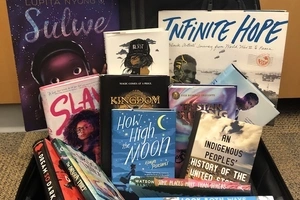
Ebony Elizabeth Thomas, expert in children’s literature, releases her 5th annual list filled with stories of perseverance, love, loss, and self-discovery that children and young adults can relate to, escape into, and cherish.
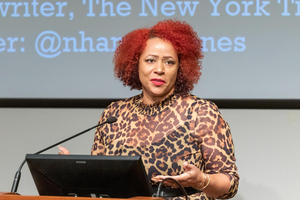
Hannah-Jones, the investigative reporter who led the New York Times Magazine’s 1619 Project, delivered the Steven S. Goldberg and Jolley Bruce Christman Lecture in Education Law.