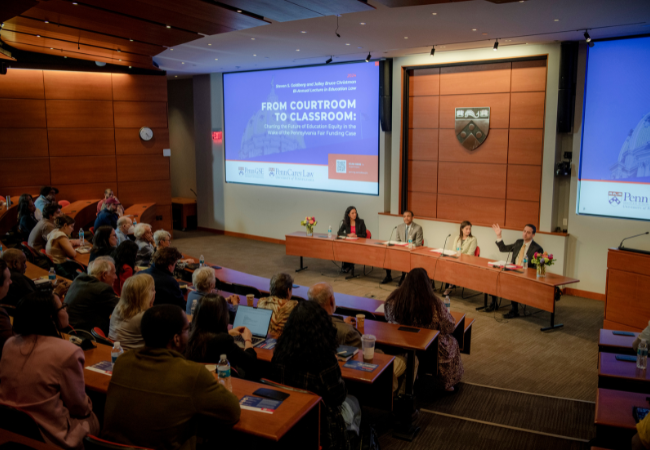
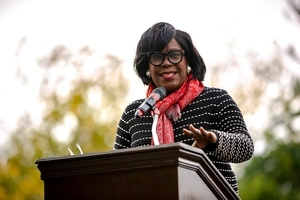
The panel covered the conditions in Pennsylvania that led to the lawsuit, what “equitable funding” could or should look like for the 500 diverse school districts across the state, and the specific needs and impacts in Philadelphia.
Perna expresses concerns that the problematic FAFSA rollout could undermine trust in the system and exacerbate the declining college enrollment trends.
Tyler Thigpen says that most K12 schools in America are currently designed in a way that makes students more dependent, reliant on external guidance, and overall poorer critical thinkers. He argues that a system which gives the child's goals, aspirations, and autonomy the highest importance is the fix.
A. Brooks Bowden, now a tenured associate professor at Penn GSE, transforms her early passion for psychology into influential educational policy research, driving change and shaping futures from the very institution that once inspired her own.
Penn GSE faculty recently co-hosted a conference at Johns Hopkins University’s Bloomberg Center in Washington, D.C., dedicated to bolstering teaching ranks.
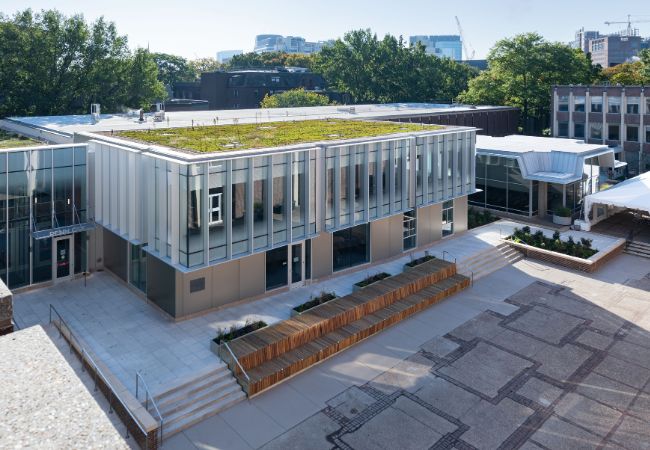
Sustainable upgrades include green roofs, terra cotta and aluminum shading elements, mechanical system updates, and greater use of natural light, combining for 40 percent annual energy use savings.
Sigal Ben-Porath says it was reasonable for colleges to try and balance preserving free speech while not letting demonstrations disrupt other student experiences, but that what Columbia did was dramatic, if not completely unexpected.
Jonathan Zimmerman discussed free speech and academic freedom in relation to concerns of antisemetic speech on campus, and what the definition of such speech would be.
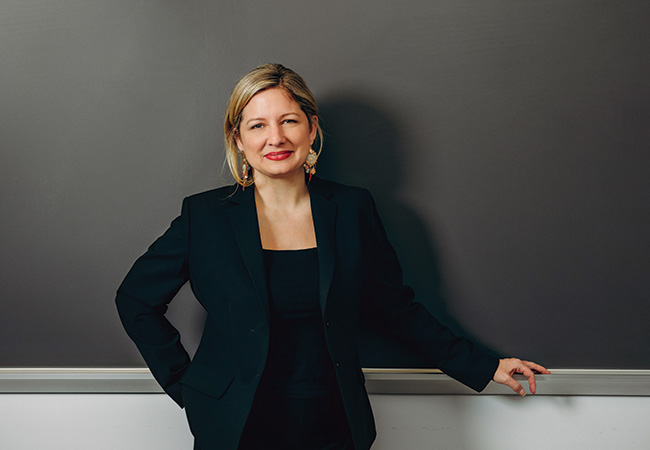
Kandi Wiens discusses how to combat burnout, and argues that it should be reframed as an occupational problem that requires organizational change instead of a personal failing.
The talk explored the concept of the “Big Blur,” a model that integrates the final years of high school with early college experiences and workforce preparation.
With over 30 years of experience in education and organizational development, María Luisa García Underwood, CEO of M. Ideas Consulting Services, Inc., shares her journey into the field of Diversity, Equity, Inclusion, and Belonging (DEIB).
Vice Provost for Faculty Laura Perna says it is extremely important for students, especially low-income students and first-generation students, to complete the FAFSA as they try to identify ways to pay for college.
Bonilla’s collaborative research underlines the critical influence of mental health on the academic persistence of first-time, low-income community college students, advocating for enhanced support systems.
Jonathan Zimmerman explains that controversy around what is being taught in classrooms is nothing new, but what is new is the aggressive legislative approach states are taking.
The team has built a database of institutions nationwide documenting schools’ work on reparations and is currently surveying students of African descent from 11 universities over four years about their experiences on campus.
These seven Penn GSE alumni will be recognized May 18 during the Celebration of Educators, alongside teacher honorees and other annual award recipients.
Michael A. Gottfried explains the impact of student absences on their peers, citing his research that shows when 10% of a students' classmates are absent on a given day, the student is more likely to be absent the next day.
Richard Ingersoll highlights the complexities and uncertainties in evaluating teacher shortages, pointing out high attrition rates and a significant reserve pool of former teachers, while questioning whether shortages stem from low supply or poor retention.
Bonilla highlights the shift from vocational training to career technical education, emphasizing its role in reducing dropout rates and promoting equitable learning opportunities.
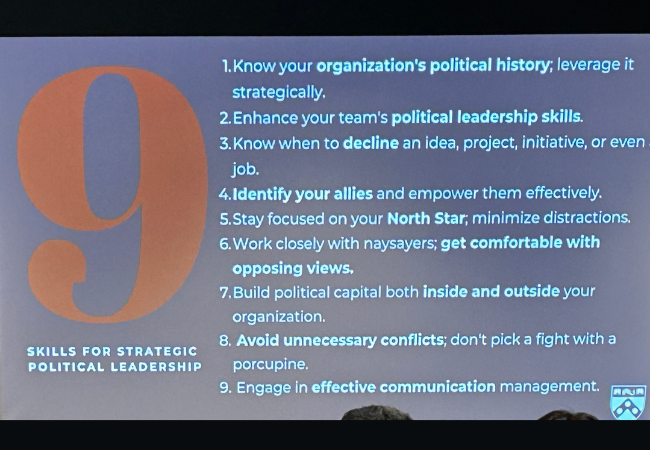
The McGraw Center's inaugural symposium, led by Cheryl Logan, focused on equipping education leaders with the skills needed to navigate the political landscape, improving student experiences and leader longevity in the field.
Richard Ingersoll highlights the critical need for qualified teachers and suggests reducing teacher turnover by offering support, decision-making input, and mentorship programs for new teachers to address shortages while underscoring the importance of adequate compensation and respect.
Bowden’s research demonstrates how lenient grading policies in North Carolina high schools lead to reduced student effort and wider academic gaps, questioning current educational reforms.
Gard developed the Financial Viability Index, a color-coded tool designed to help small, tuition-dependent colleges analyze their financial health efficiently and take actionable steps to avoid closure.
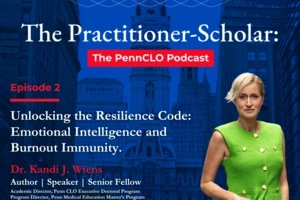
Dr. Kandi Wiens, author of Burnout Immunity, joins us to shed light on the science of resilience and emotional intelligence. Dr. Wiens' pioneering research serves as the foundation for a discussion that aims to answer the pressing question: why do some individuals thrive under stress while others falter?
Alan Ruby warns that a Trump re-election could lead to stricter enforcement of immigration policies affecting international students, potentially impacting their mobility and the broader landscape of international education.
Karen Weaver critiques the substantial bonuses for Maryland football coaches for bowl games as indicative of the competitive and costly nature of collegiate sports talent acquisition, reflecting broader financial pressures and priorities within college athletics.
Michael Gottfried emphasizes the role of school environments in student absenteeism. He notes students with disabilities feel more connected and attend more in inclusive settings than in segregated ones, underscoring the importance of creating hospitable learning environments for all students.
Sigal Ben-Porath recommends clear communication and contextually relevant discussions as strategies for universities to navigate the complexities of free speech on campuses.
Peter Eckel notes the exceptional nature of governance problems at North Idaho College, stressing that institutions cannot endure under poor governance. He highlights the pivotal role of board-president relations, which were notably strained at the college, impacting its operational effectiveness and accreditation status.
Robert Zemsky spearheaded a national initiative to pilot three-year bachelor’s degrees with fewer than 120 credits, aiming to reduce college costs and accelerate workforce entry. The initiative has influenced about 20 schools to consider adopting more accessible and efficient higher education models.
Rand Quinn contextualizes the historical and ongoing challenges of school segregation in San Francisco, underscoring the long-standing difficulties in desegregating schools despite various initiatives aimed at fostering racial balance and diversity.
Karen Weaver explains that unionizing would empower athletes to negotiate directly with administrators on key issues like practice lengths and medical care, marking a shift from the traditional model where schools dictate the terms.
Sigal Ben-Porath discusses the challenges private colleges face in balancing inclusivity and free speech, noting that policies may unevenly limit expression, complicating efforts to maintain an open academic environment.
Explore West Philadelphia's heritage in a richly illustrated digital archive, where a community's stories of resilience, struggle, and triumph come to life.