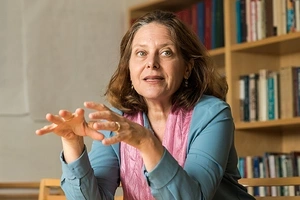
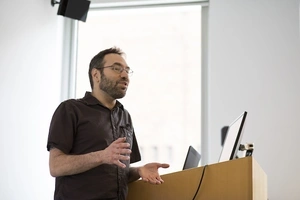
Jonathan Zimmerman speaks about how teaching has been ignored until recently because “it has never been professionalized.” He says research has received more attention while teaching has gotten less, and suggests four guidelines for those considering peer review of teaching.
Struck by her own experience as an educator, Penn GSE alum Rina Madhani is helping promote childhood literacy in the underserved communities of the Bronx through a growing nonprofit.
Michael Gottfried speaks about mental health absences in schools. Unexcused absences can lead to truancy, get kids into trouble, get parents into trouble, and can lead to juvenile justice outcomes, he says. Schools need to keep careful track of students who take repeated mental health days.
Penn GSE doctoral student Lightning P. Jay talked with Tech & Learning about ways educators can engage in this difficult but worthwhile conversation with their students.
Jonathan Supovitz comments on the drop in Pennsylvania students’ standardized testing scores. Given the pandemic and the challenges of virtual learning, Supovitz says the scores are “not surprising, and it is also entirely consistent with other places in the country.”
Ryan Baker shares some best practices and which practices to avoid after two years of virtual learning. Virtual learning should focus on ensuring that students experience as little disruption to their education as possible. The key to that is creating a discourse around the use of technology.
The meeting featured high-level findings from four research studies and a thorough discussion of Penn GSE’s educational framework for practice-based learning.
Richard Ingersoll expressed concern about lowering the bar for teachers. “Remote sometimes might be much more preferable to getting some substitute in there who’s basically babysitting,” he said.
Penn GSE’s Abby Reisman and Sigal Ben-Porath penned a piece for the Washington Post denouncing legislative efforts to limit classroom discussions on race, gender, and sexual orientation.
Jonathan Zimmerman said that bills banning the teaching of so-called “critical race theory” in schools could create more problems for conservatives than they solve. “I understand the danger of indoctrination in our schools, about race and everything else,” he said. “But the solution to that problem is to present multiple perspectives in our classrooms, not to bar certain perspectives from them.”
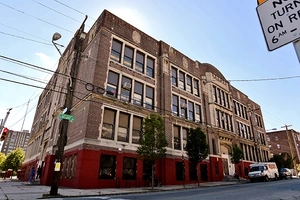
Following the formalization of a five-year, $4.1 million deal between Penn and Henry C. Lea Elementary School, many throughout the city are wondering how the extra support will transform the school over the coming years.
The University and its Graduate School of Education will contribute more than $4 million to the West Philadelphia K-8 school throughout the next five years.
Rabani Garg and Sibylla Shekerdjiska-Benatova discuss what goes into the creation of the Best Books for Young Readers list — and what it means to them.
One of many virtual offerings of Penn GSE’s Center for Professional Learning, the Strategic Leadership Certificate program is helping educators strengthen their effectiveness and deepen their impact.
Now more than ever, it is imperative that the stories we tell, read, and write are reflective of the histories and experiences of the many different communities that make up our world — communities which are often missing from bookshelves in schools and libraries.
Jonathan Zimmerman posed tough questions about who will instruct students about the January 6, 2021, insurrection. Most of our history teachers, he says, are not adequately educated for that task.
St. Mark’s School, Kent School, John Burroughs School, and Marin Academy will join 17 host partner schools working directly with Penn GSE to provide intensive teaching fellowships to aspiring early career teachers.
The online master’s program will explore inequity, social justice, and education policy at a pace designed to accommodate the busy schedules of full-time educators.
A transformational new scholarship at Penn GSE will provide significant funding to diversify the nation’s pipeline of teachers and educational leaders and propel work that benefits marginalized populations.
As a complex era fuels urgent questions about the state of American democracy, faculty and students at Penn GSE are examining key issues of freedom, voice, and dialogue while helping foster respectful discussion within the classroom and beyond.
Jonathan Zimmerman asked, “Can we be honest about critical race theory (CRT)?” He argues the topic has become highly politicized. To confront biases, one must share different versions of America with students and allow them to use critical thinking skills to confront conflicting truths and weigh opposing arguments.
In a new study, Penn GSE’s Sharon Wolf documents in detail how inequalities impacted learning in Ghana during the pandemic and shares how that could inform any nation’s approach to instruction this fall.
The first Penn Integrates Knowledge professor to hold an appointment at Penn GSE, Dr. Roberto Gonzales discusses the journey that led to his research on immigrant populations and envisions next steps in his new role.
The Penn GSE community mourns the loss of longtime staff member Betty Deane, who served an extraordinary tenure of more than five decades at the School.
Recent graduates of Penn GSE’s three teacher education master’s programs are implementing what they’ve learned, showing a deep commitment to their students’ futures as they teach mathematics, English, and science.
In an op-ed in EdWeek, Penn GSE’s Dean Pam Grossman, Zachary Herrmann, and Sarah Schneider Kavanagh write that incorporating project-based learning is just like running: start a little at a time.
Penn GSE Dean Pam Grossman spoke with historian and best-selling author Jill Lepore at the School’s annual Steven S. Goldberg and Jolley Bruce Christman Lecture in Education Law
An inaugural Penn Projects for Progress program led by a Penn GSE team focused on reconnecting West Philadelphia students to school and one another, rather than academic remediation.
Michael Gottfried said COVID-19-related school absences may disrupt all students’ learning. “Part of me is just like let’s just go back to Zoom for everyone,” he said. “I want to be in person more than anyone else. That is, the last thing I want to do is sit on Zoom and teach. So I feel for these kids. But what kind of learning is it going to be without a real fallback plan in place?”
Ameena Ghaffar-Kucher's “Teaching Beyond September 11” curriculum has sparked conversation of the importance of learning about 9/11 in school. Many states, including Colorado, do not have a school curriculum that teaches about the “increasingly distant historic event.” There is hope that students “would understand everything that happened that went into that event taking place and they would work to make sure that event never takes place again.”
Ameena Ghaffar-Kucher spoke about “history from the last 20 years that is completely neglected.” The “Teaching Beyond September 11” curriculum “is really speaking to that gap and helping young people understand just how the world has changed as a consequence of that awful day,” she said.
Brooks Bowden cautions that while the effect sizes in the ARC Core research study were large compared to studies of older students, there are few similar studies of kindergarteners to provide a basis for comparison.
Caroline Watts discusses educators’ experiences during the early days of the pandemic, lessons learned and how the classroom might be different in the coming months.
Richard Ingersoll comments on teachers leaving the profession if the economy continues to improve and they continue to feel stress. “Typically we find that employees across the economy tend to quit less during economic downtimes,” he said. “There’s a lot of indications that in fact, during the pandemic, teacher turnover and teacher retirements may have even gone down.”
Brooks Bowden comments on the amount of work that needs to be done before and after school reopen for the fall. “We’ve all got a lot of work to do,” she said. Bowden thinks “educator coaches, tutoring services, and supports for families can go a long way.”
In new research published in Educational Evaluation and Policy Analysis, Michael Gottfried (Penn GSE), J. Jacob Kirksey (Texas Tech) and Tina L. Fletcher (Penn) examine the impact of having a same-race teacher on attendance.
Project-based learning could change the game for students this fall. Sarah Schneider Kavanagh and Zachary Herrmann have some thoughts on what school leaders need to do to support it.
A new report from Ryan Baker and the Penn Center for Learning Analytics examines the emerging field of learning engineering and recommends top opportunities where researchers and practitioners should focus their energies.
To help children prepare to start school, Katie Barghaus and Casey Henderson from the Penn Child Research Center’s Conquering Kindergarten initiative offer some tips.
Ryan Baker spoke about his new report identifying areas of improvement for ed tech developers. “The number of educators who are fully satisfied with technology solutions is pretty low. They are looking for better ways to save time and effort for auto grading and looking for richer activities,” he said.
By teaching, implementing curricula, creating experiences outside of the classroom, and engaging undergraduates in community service, these alumni are preparing the next generation for U.S. civic life.
Penn GSE’s Dr. Charlotte Jacobs talks about her approach to research, the intersection of research and practice, and how she’s aiming to increase access to her work.