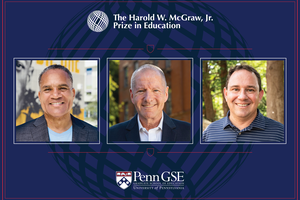
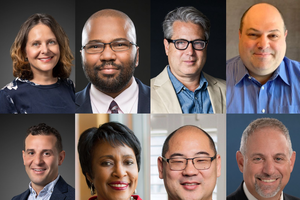
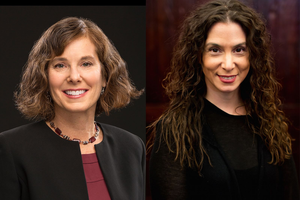
Darin Brawley, Shai Reshef, and Michael Webber are recognized for their pioneering contributions that have advanced learning opportunities and impacted countless lives.
This article cites Sharon Ravitch's book, Applied Research for Sustainable Change, in explaining what practitioner-led qualitative inquiry is and why it's a better way for leaders to understand organizational culture and their people's perspectives.
Laura Perna says that one effect of Tennessee's free community college programs is their attraction to students instead of a traditional, private 4-year college education.
Karen Weaver says college athletics programs can no longer afford to redirect some donor money to academics in the current system, but are now incentivized to spend every dollar they bring in trying to get a competitive advantage.
Karen Weaver discusses the multiple challenges facing Wake Forest University's athletics department in the NIL and conference realignment era as its new president takes over.
Robert Zemsky says that many students are dropping out or transferring before completing four years of traditional college, hence describing the failing college model as "product rejection."
Karen Weaver says that schools with strong sports programs are opening ways for sports business students to work with their athletics teams as part of a larger shift in the college athletics industry.
A new report from Penn GSE researchers explores one of the most pressing tensions in education policy today: how to ensure rigorous preparation for teachers while expanding access to the profession.
Penn GSE alumni, faculty, and education leaders returned to campus for a timely conversation on how artificial intelligence is reshaping classrooms, teaching, and learning.
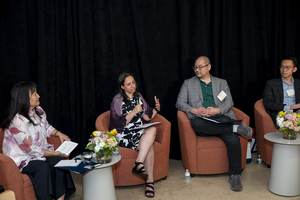
A recent panel discussion—kicking-off a series of events in honor of America's 250th birthday—covered the future of higher ed through the lens of its past and tumultuous present. The panel featured university leaders including Dean Katharine Strunk, McGraw Center for Educational Leadership Executive Director John Silvanus Wilson, Jr., and Penn President J. Larry Jameson.
Sade Bonilla's recent research study on the relation between student background and academic performance is the center point of this Philadelphia Tribune article.
Michael Smerconish speaks with Jonathan Zimmerman about the book "Free Speech: And Why You Should Give a Damn," co-authored with Pulitzer Prize-winning cartoonist Signe Wilkinson.
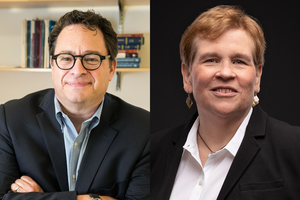
Honors from AERA, Penn AI, Penn Alumni, and national organizations highlight faculty and staff contributions across education research, artificial intelligence, and public engagement.
Jonathan Zimmerman says that, although findings show that most service workers now have college degrees, students should not be discouraged from attending college.
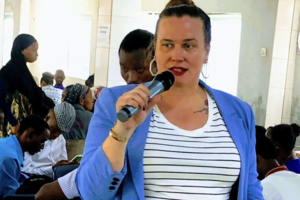
The director of growth and impact at Catalyst @ Penn GSE was selected by Sierra Leone’s Central University to help create curriculum and policies as they launch their first postgraduate programs.
During the month-long initiative focused on human-centered AI, Penn GSE will host several events, including a faculty panel on responsible AI use, a two-day symposium on AI in education, and a mindfulness forum.
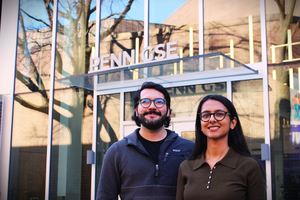
Luis Morales-Navarro and Shruti Mehta join a University-wide cohort of researchers exploring how artificial intelligence can shape fields ranging from medicine to education.
Professors Janine Remillard and Sharon Ravitch recently joined the Re-Educated podcast to discuss curriculum use and practitioner research in education.
Drawing on her nationally recognized expertise as an economist of education, Dean Katharine Strunk warns that a new federal proposal misclassifies education degrees and threatens the pipeline of counselors, principals, and mental health professionals.
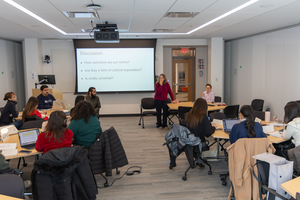
In this co-taught class, Abby Reisman and Sigal Ben-Porath encourage students to consider their roles and identities as participants and facilitators of discussion as they grapple with the role of classroom discourse in K–12 and higher education settings.
Robert Zemsky says that proposals to introduce three-year bachelor’s degrees at some University of Wisconsin campuses reflect a growing effort to reduce the cost and time required to complete college while maintaining the value of a traditional degree.